
Ongoing Research
Our research covers many parts of the caregiving and aging journey, from supporting family caregivers, to navigating loss and changes in identity, to exploring new tools and programs making care more compassionate and accessible. Below, you will find our work organized into key themes and links to full papers if you want to read more.
Understanding the Experiences and Needs of Family Caregivers
Family caregiving is one of the most essential yet overlooked forms of healthcare, shaping caregivers’ identity, relationships, and development. We aim to inform interventions and policies that recognize the enduring impact of caregiving and support individuals before, during, and after the caregiving experience.
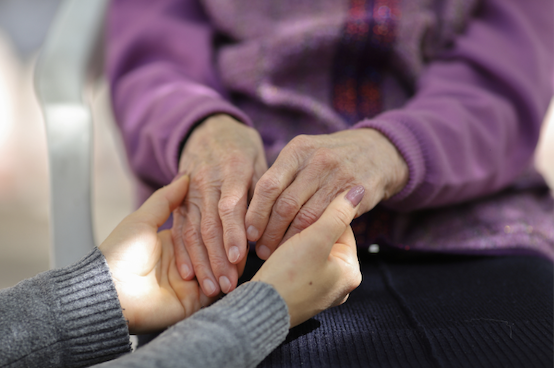
Spotlight Article: “How can I be a caregiver for a second time?” A call to action to acknowledge and support experienced family caregivers.
You’ve done it before. Spending years caring for a loved one and being asked or feeling there is “no choice” but to do it all over again. This looks at a group hiding in plain sight: experienced caregivers. The people who care not once, but twice, three times, or more across their lives. While experience brings resilience, it also piles on years of stress, loss, and sacrifice. Our healthcare system depends on these experienced caregivers, but rarely stops to ask what it costs them. It’s time to recognize and support those who keep showing up to care with increased research and policy attention.
Other Papers:
- “A little bit different now:” Impacts of caregiving for a parent with cancer on the psychosocial development in emerging and young adulthood.
- Personal health planning in midlife former caregivers of persons living with dementia.
- Re-writing the story of mid- and late-life family caregiving: Applying a narrative identity framework.
- Former dementia caregivers’ high and low point narratives: What is remembered, and how is it shared?
- “Been there, done that:” A grounded theory of future caregiver preparedness in former caregivers of parents with dementia.
- Caregiver self-esteem as a predictor of patient relationship satisfaction: A longitudinal study.
Aging, Bereavement, and Wellbeing
Aging and loss shape how people find meaning and maintain wellbeing over time. The Frost Lab studies how older adults remember, make sense of, and adapt to experiences of illness, death, and bereavement. By understanding how people cope and grow after loss, we aim to support emotional resilience and a continued sense of purpose in later life.

Spotlight Article: Trajectories of purpose in life across diagnosis of Alzheimer’s Disease or related dementias in older adulthood.
What happens to your sense of purpose when life changes overnight with a diagnosis? By tracking people overtime, the insight is clear: illness doesn’t just affect the body, it reshapes how people see their place in the world and their purpose. Sense of purpose tends to slip for those facing dementia related diagnoses while it stays steady for people with heart disease or no diagnosis at all.
Other Papers:
- Remembering the life and dying days of a deceased close other: Memory recall and associations with loss context.
- When Harry met Sally: Older adult spouses’ first encounter reminiscing and well-being.
- Loss in the life story: Remembering death and illness across adulthood.
- Narrating final memories from spousal loss: The role of place and quality of death.
Interventions to Support Family Caregivers
Caregivers often feel all the weight fall into their hands, and it can become overwhelming to handle not only caregivingbut the decisions, finances, and life events of their family member with dementia. The Frost Lab’s newest endeavor hasbeen to develop solutions to help caregivers whether it be for enhancing their personal life as a caregiver or for workingalongside their person living with dementia.

Spotlight Article: Persons living with dementia and multiple chronic conditions identifying health priorities with care partners.
A doctor’s visit can feel like a maze of decisions. What do you bring up first? What matters most? This research team wants to change that by creating a program helping dementia patients and their care partners pinpoint these questions. The goal? To walk in ready to make a real plan together with their provider. The team highlights what’s working, what’s not working, and what needs to be improved for the future.
Other Papers:
- “WOOP is my Safe Haven”: A Qualitative Feasibility and Acceptability Study of the Wish Outcome Obstacle Plan (WOOP) Intervention for Spouses of Persons with Early-Stage Dementia.
- Clinician’s perceptions of care partner involvement in health priorities identification for people living with dementia.
Improving Geriatric and Palliative Care with New Programs and Technologies
High-quality care for older adults and people with serious illness is essential, yet many healthcare systems struggle to meet their emotional and medical needs. The Frost Lab creates and tests new programs and technologies to make geriatric and palliative care more compassionate, personal, and accessible.

Spotlight Article: Mechanisms of dignity therapy: positive outcomes in older cancer patients. Journal of Palliative Medicine.
In Dignity Therapy, the patient’s own story seems to matter more than the provider’s empathy. Patients who shared more detailed accounts of their lives showed larger gains in dignity and therapeutic progress. This suggests that much of the benefit comes from patients reflecting deeply on their own lives.
Other Papers:
- Research priorities in neuropalliative care: A consensus statement from the International Neuropalliative Care Society.
- “Hospice care could be a compassionate choice.”: ChatGPT responses to questions about decision making in advanced cancer.
- An initial examination of ChatGPT responses to questions about decision making in advanced cancer.
- Acceptability and Ease of Use of an Online Health Priorities Self-Identification Tool for Older Adults: A Qualitative Investigation.
- Initiating the Care and Communication Bundle to promote palliative care in the Neuro-ICU.
- Introducing a Supportive Care Team for Advance Directive education in a neurological and neurosurgical patient population.
- Providers’ perspectives on palliative care in a Neuromedicine-Intensive Care Unit: End-of-life expertise and barriers to referral.
Death Attitudes and Life Priorities
The Frost Lab studies how people of different ages understand mortality, reflect on their values, and make choices about how to live meaningfully. Our research explores how beliefs about death shape priorities, relationships, and personal growth. We aim to promote open conversations about living well, even while recognizing life’s finitude.

Spotlight Article: Death over Dinner: Evaluation of a national death education initiative.
Imagine sitting down with friends and one of the most uncomfortable topics there is comes up: your own mortality. Death Over Dinner is an initiative encouraging open talk about death, dying, and end-of-life wishes. Participants walked away less scared, less resistant, and more open to thinking about how they want their futures to unfold, even those who had lost loved ones or feared death the most. Bringing death to the table doesn’t darken the mood, it makes room for life.
Other Papers:
- Reflecting on death: priorities for living well.
- Even the good life has an ending: Pursuing virtue in the face of finitude.
- Youths’ outlook on the future in the midst of COVID-19: The role of personality profiles.
- Remember me: Examining themes of virtues in ultimate self-defining memories across adulthood.
- The end: Death as part of the life story.
- In memory: Predicting preferences for memorializing lost loved ones.
Empathy, Mutuality, and Compassion
We examine empathy, mutual support, and (self) compassion as key drivers of productive communication, healthy relationships, and good mental health across adulthood. These studies span clinical, family, and community contexts.
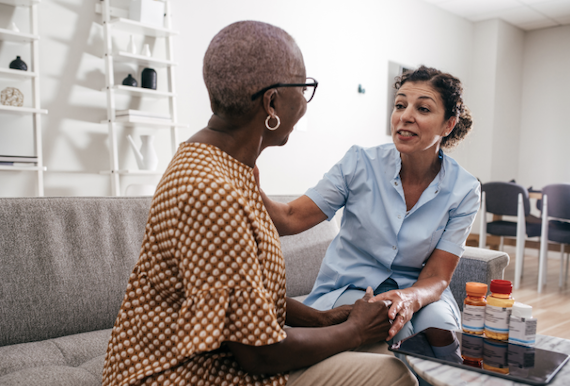
Spotlight Article: “One more picture:” A mixed-methods examination of caption content in a photo captioning cognitive empathy intervention for dementia caregivers.
A simple photo caption can reveal meaningful differences in perspective. Caregivers growing in perspective-taking wrote captions reflecting the inner voice of someone living with dementia, while others wrote generic and detached captions. The takeaway? When encouraging caregivers to take photos of their person and write captions, the caption is a powerful tool for growing perspective-taking and improving caregivers’ mental health.
Other Papers:
- Mapping the evidence of self-compassion in caregiver wellbeing for caregivers of persons with neurodegenerative disease: A scoping review.
- Navigating the COVID-19 pandemic together: Discussions between persons with early-stage dementia and their adult children.
- Empathic communication between clinicians, patients, and care partners in palliative care encounters.
- Empathic communication in specialty palliative care encounters: An analysis of opportunities and responses.
- Sharing “off-script”: A qualitative analysis of providers’ empathic self-disclosures during dignity therapy.
- Spousal Discrepancies in Perceived Needs of People Living with Alzheimer’s Disease: A Mixed-Methods Study of Caregivers’ Perspective Taking and Dyadic Communication